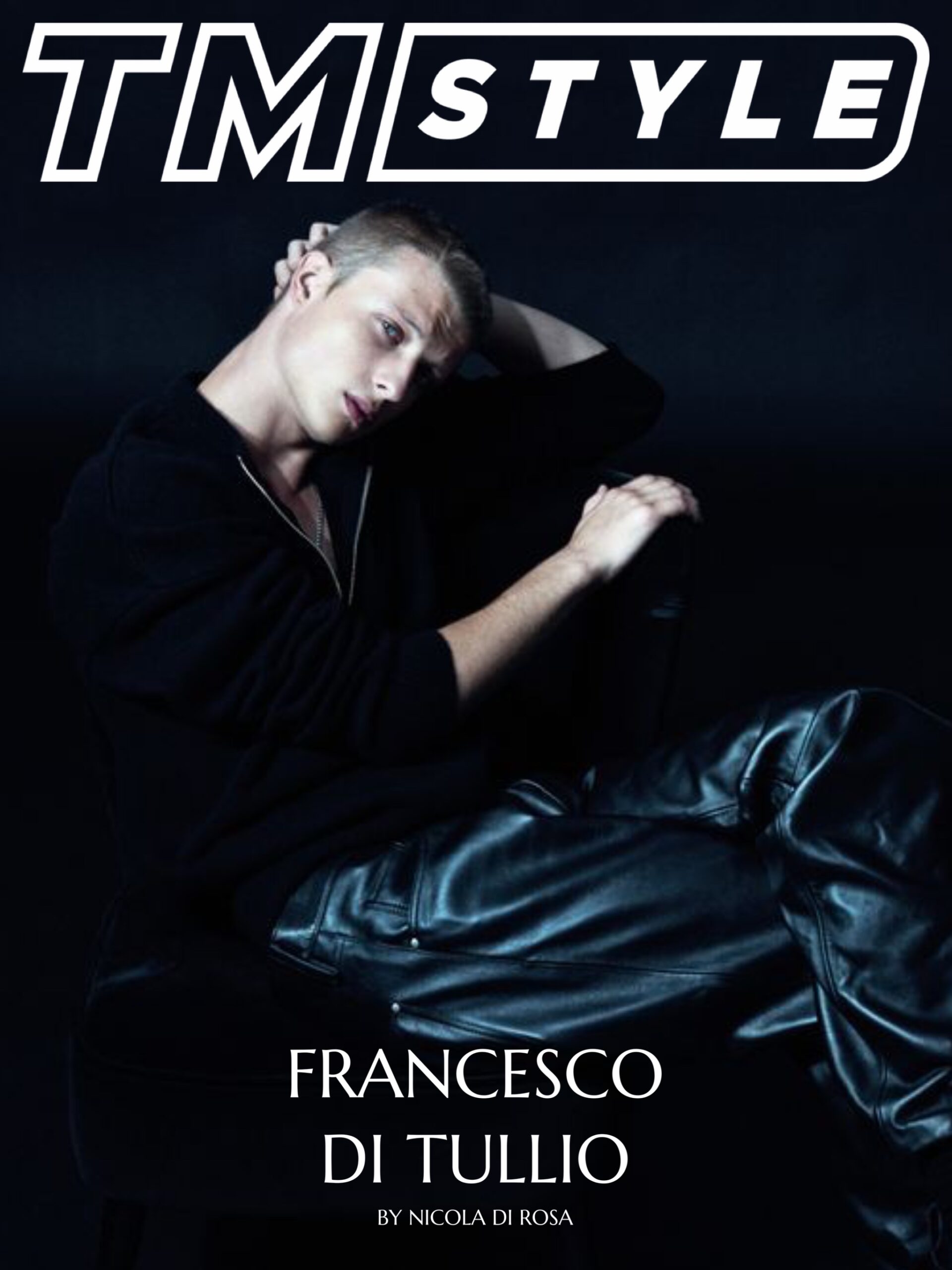
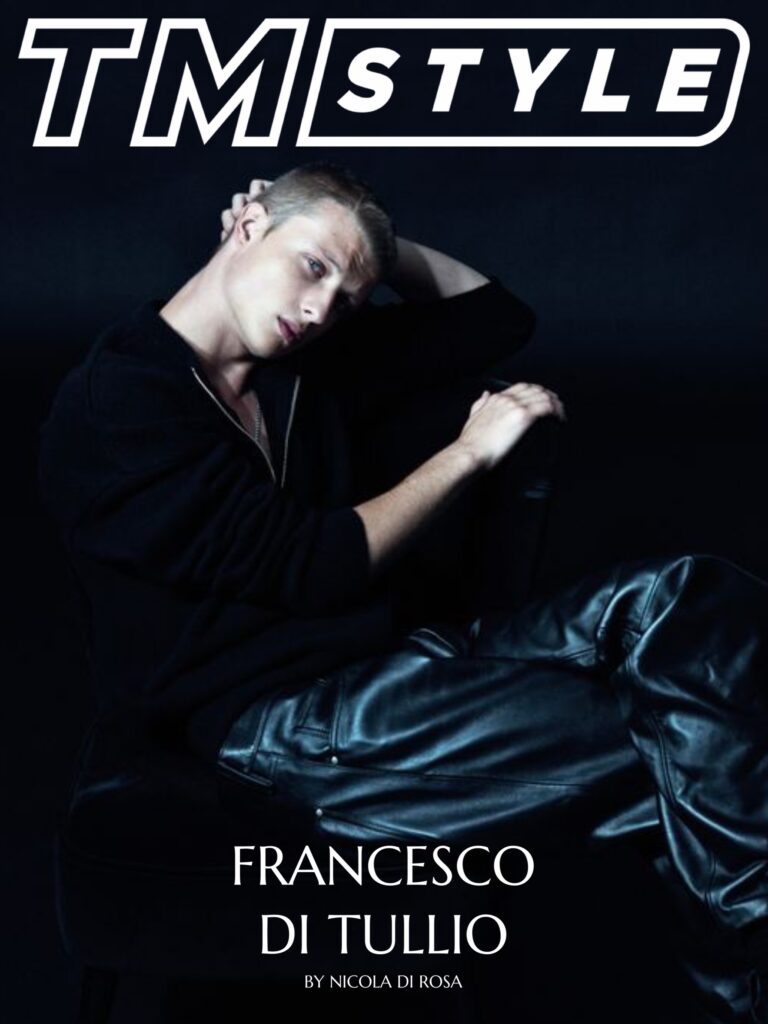
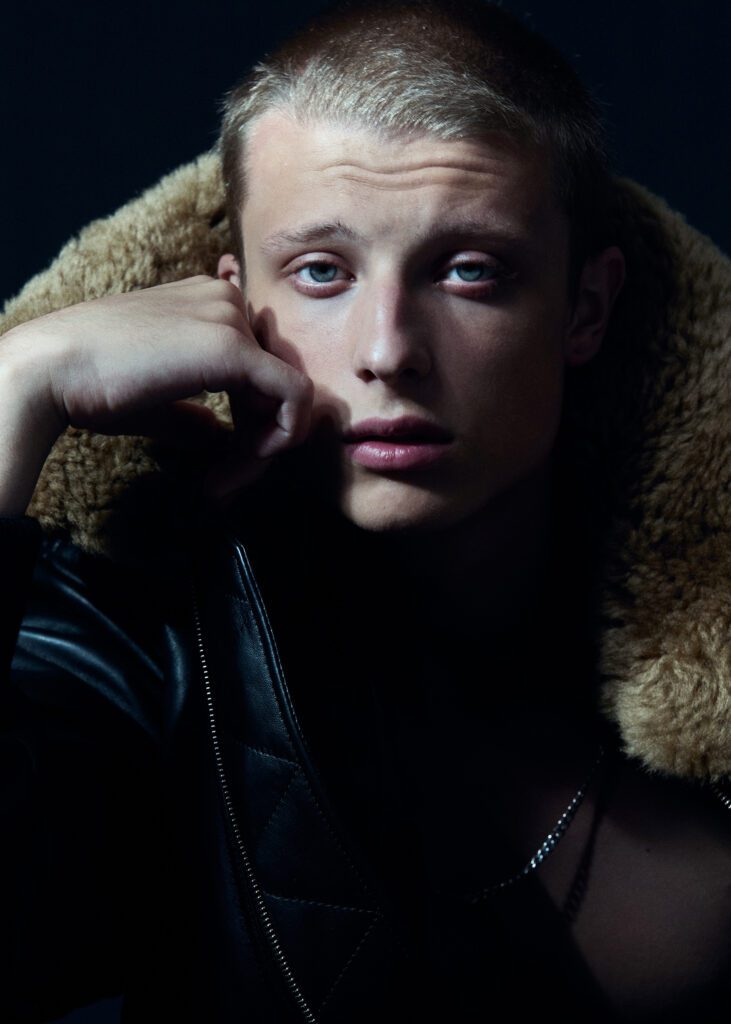
Aos 18 anos, Francesco Di Tullio representa uma nova geração de artistas italianos que transita entre atuação, música e teatro. Conhecido por seu papel em Mare Fuori, o jovem milanês também encontra na moda uma extensão de sua personalidade, misturando streetwear, referências ao rock e à trap e elementos da alfaiataria italiana.
Nesta entrevista, Francesco fala sobre estilo, liberdade, música e a relação entre figurino e construção de personagens, revelando como diferentes influências ajudam a definir sua identidade dentro e fora dos palcos e das telas.
PHOTOGRAPHER: Nicola De Rosa @derosanicola
PHOTOGRAPHER ASSISTANT: Umberto Pettazoni
STYLIST: Garigliano
STYLIST ASSISTANT: Mabrouk Sayah @mabrouksayah
GROOMING: Serena Palma @serenapalmaaa
TALENT: Francesco Di Tullio @_francescoditullio
PUBLICIST: MPunto Comunicazione @mpunto_comunicazione
Let’s take a look…
You are part of a new generation of Italian actors who also express themselves through music and
theater. How does menswear help you communicate these different sides of your personality?
What my style says about me—or rather, what I love most about modern menswear—is that there
are no longer any fixed rules. Fashion allows me to express every side of who I am: thoughtful and
meticulous when I’m immersed in a script, yet free, instinctive, and unapologetically expressive
when I’m performing a song. It’s both my armor and my purest form of freedom.
How would you define your personal style? Are there any wardrobe essentials you simply can’t live
without?
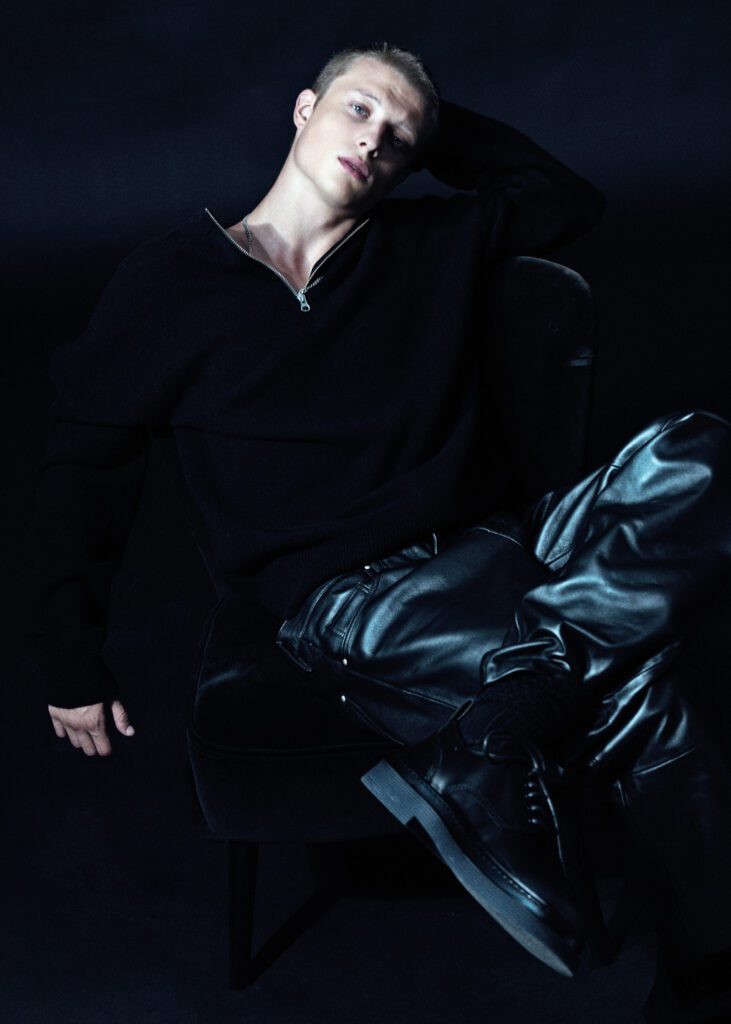
I don’t approach my style with a fixed plan. As I said, feeling free is what matters most to me. I
couldn’t imagine giving up my jeans, relaxed deconstructed trousers, tank tops, fitted tees,
comfortable unlaced boots, sneakers, or my baseball caps. They’re the pieces I always come back to
because they feel like me.
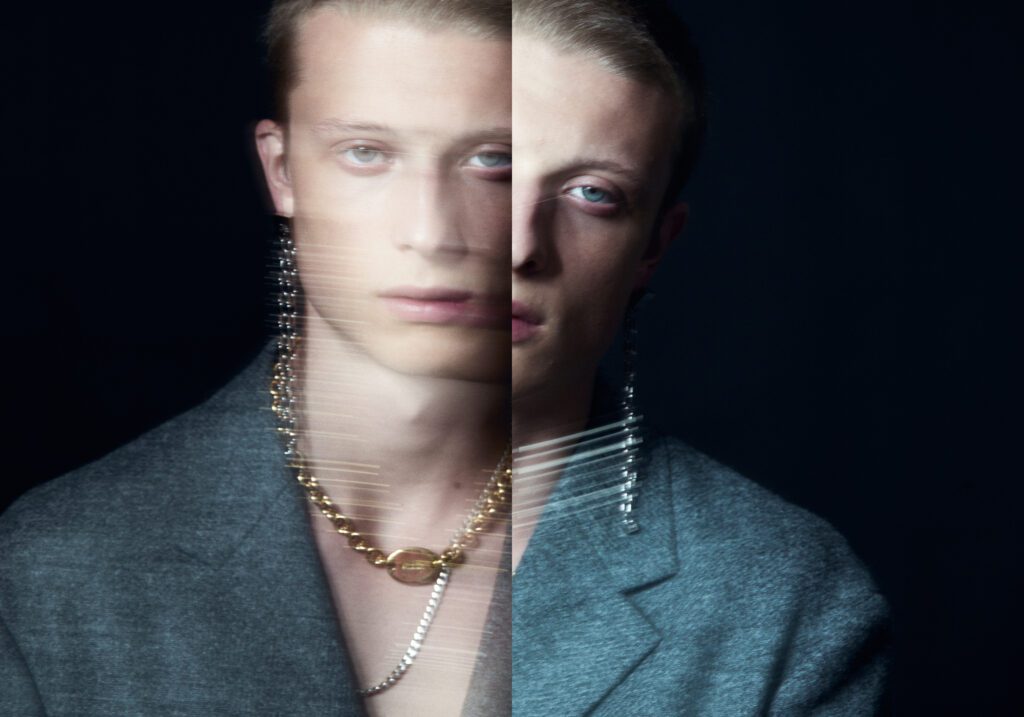
Is there a current menswear trend that you feel best represents your generation?
One of the trends that best represents many people in my generation today is the Opium/Y2K Goth
aesthetic, blended with the most extreme side of streetwear. Those of us who grew up on trap and
rap embraced hip-hop style straight from the U.S., stripped it of its clichés, and reimagined it
through a darker lens—black, charcoal grey, and punk-industrial influences. It’s an aesthetic that
brings together worlds that seem completely at odds: the raw energy of distorted trap bass and the
dark nihilism of avant-garde theatre.
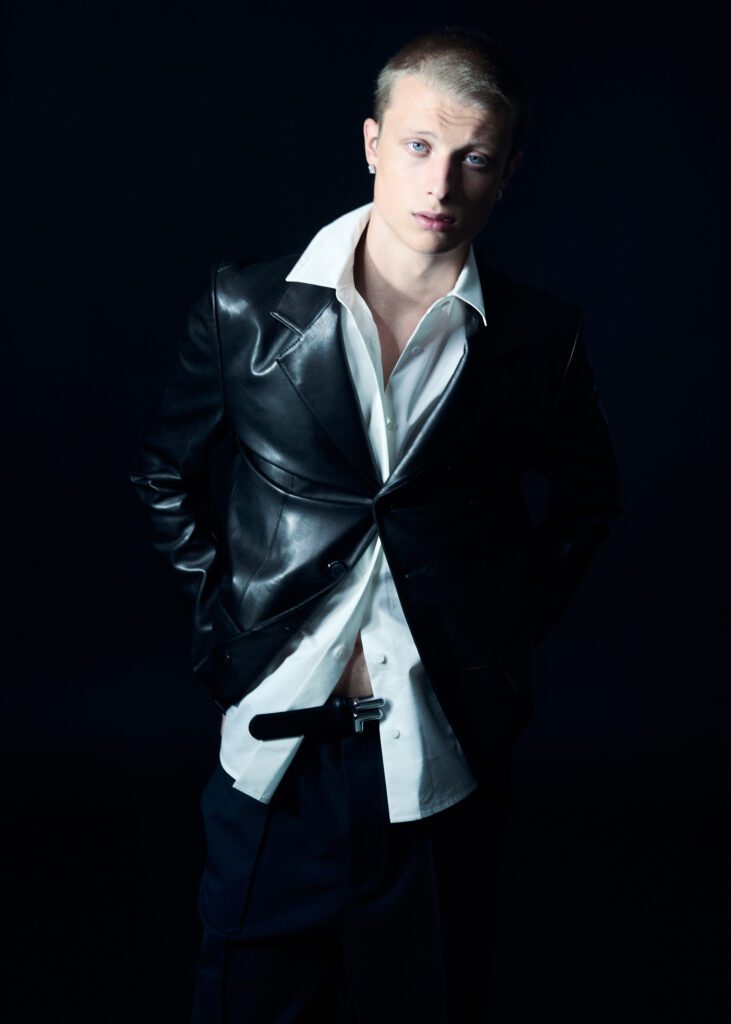
Italy is recognized worldwide for its fashion heritage. Which aspects of Italian style have had the
greatest influence on the way you dress?
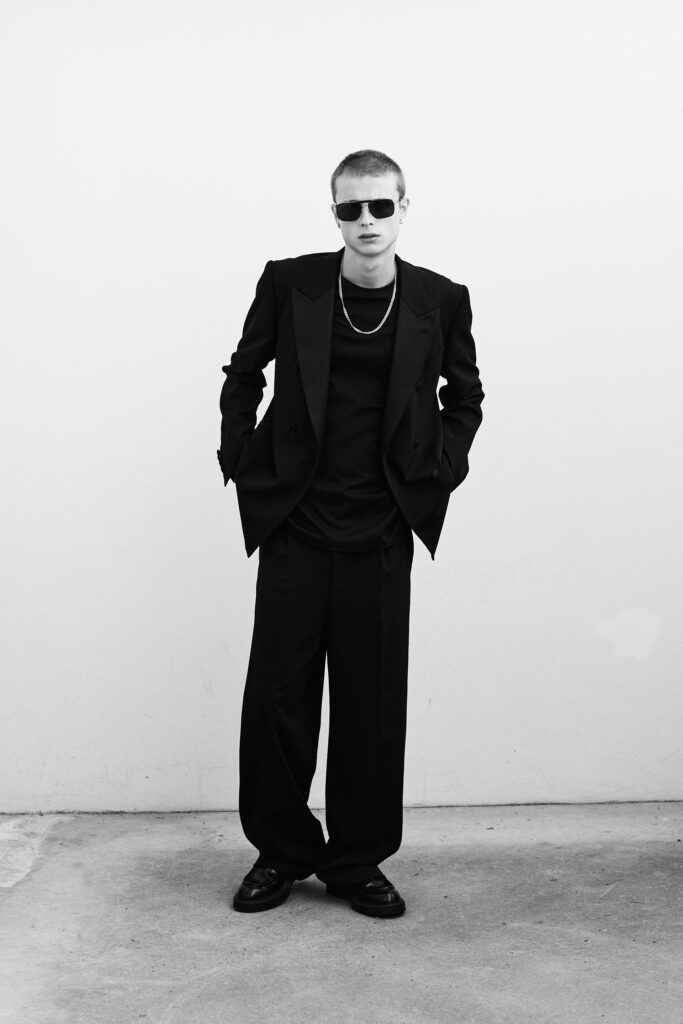
Personally, I’m also fascinated by the idea of wearing formal tailoring in a casual way—
deconstructed Armani jackets or tuxedos styled with T-shirts and sneakers. I love the tension
between refined craftsmanship and effortless, everyday wear.
Do you find yourself incorporating elements from the characters you play into your everyday
wardrobe, or do you prefer to keep your personal style separate?
When I’m working as an actor, I always follow the creative vision and the character guidelines set by
the production. That said, there are two things I really enjoy. On one hand, whenever I can, I like to
bring something of myself to a character—because the way we dress is often a reflection of who we
are, of our personality. On the other hand, I also love the challenge of building a character who’s
completely different from me, especially through clothing—wearing pieces I’d never choose in my
everyday life.
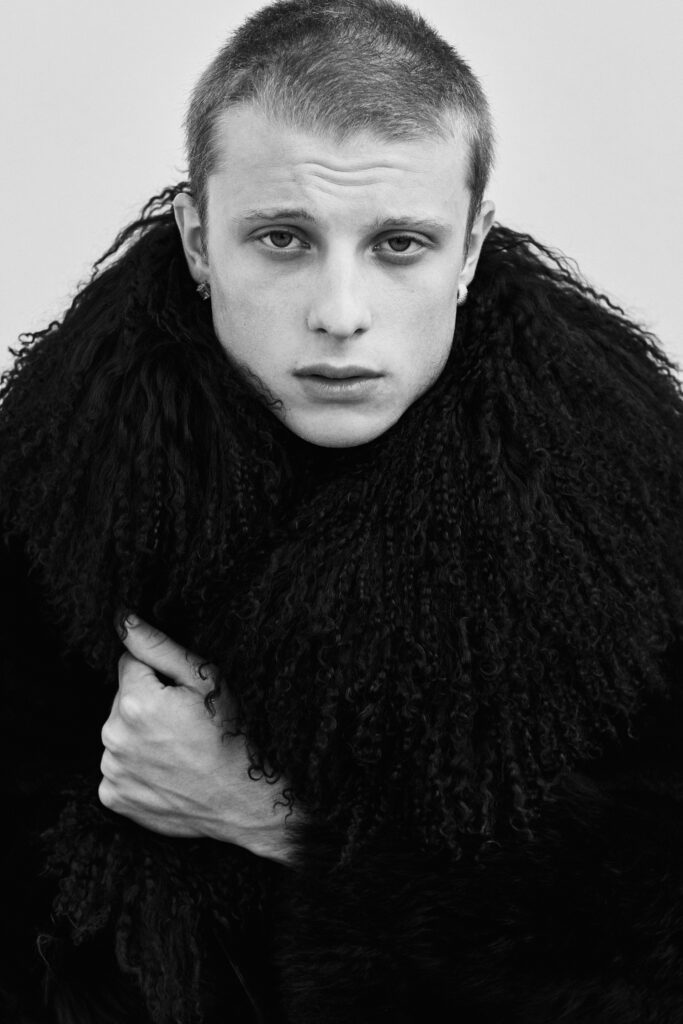
Between classic tailoring and contemporary streetwear, which aesthetic feels more authentic to
you, and why?
Contemporary streetwear—especially the darker, more avant-garde side of it that’s closely tied to
rap—is what I wear every day. But to me, neither world feels truly authentic on its own. Real
authenticity exists at the exact point where they meet. At 19, balancing my life between film sets
and the places where I perform my music, I’ve realized that choosing just one aesthetic would mean
silencing a part of who I am.
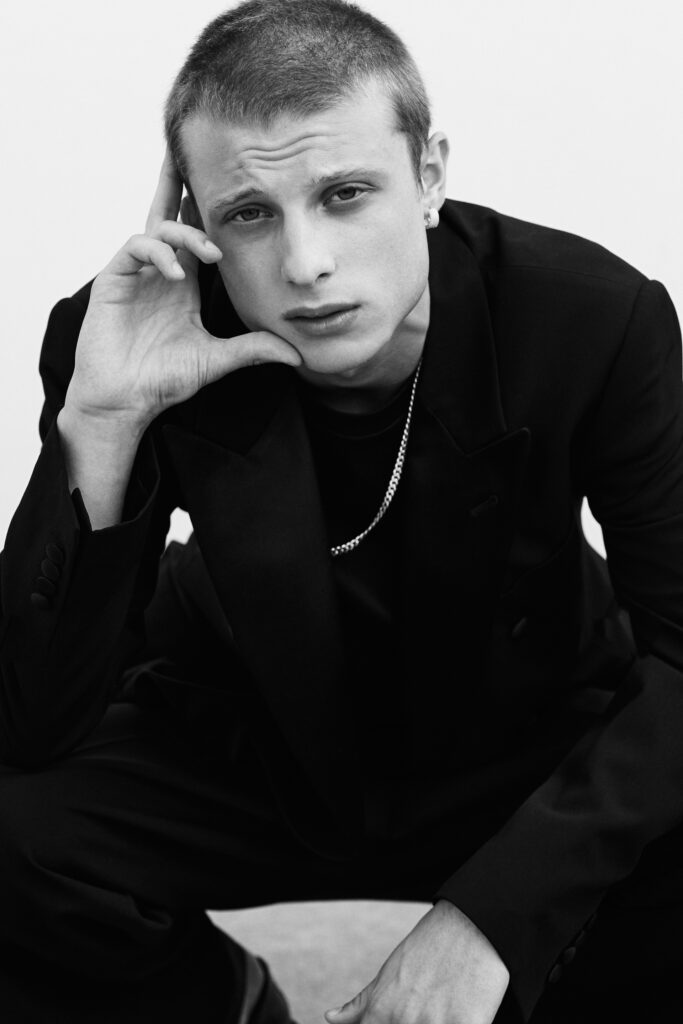
You practice basketball and boxing. Has your active lifestyle influenced the way you choose clothing,
fabrics, or silhouettes?
No, my passion for sports has never had any real influence on the way I dress.
Your career spans film, television, theater, and music. Does costume design help you step into a
character or performance in a different way?
Absolutely. A costume is never just a costume. More often than not, it’s the key that unlocks a
character, helping an actor discover and express their first defining traits. It becomes an essential
part of the transformation, making it easier to fully step into someone else’s world.
Which fashion brands or designers are inspiring you the most right now, whether in Italy or
internationally?
I’m particularly drawn to brands with a more alternative aesthetic, like Dsquared2 and Diesel. At the
same time, I really admire the design language of Armani and Burberry. In recent years, Burberry
has done an incredible job of deconstructing its traditionally classic identity by introducing
references to British punk—Daniel Lee’s latest collections are a perfect example of that.
Do you think men today feel more confident experimenting with colors, accessories, and different
silhouettes than they did a few years ago?
I strongly believe in my generation and in its pursuit of freedom: the ability to embrace colors,
accessories, and personal expression.
When it comes to red carpet appearances, do you prefer timeless elegance or are you open to
taking fashion risks?
Personally, I gravitate toward a more minimal and elegant approach to style. However, if the
professionals who curate my image recommended something more daring or unconventional, I
would be completely open to it. I think I would have fun exploring that side of myself.
Your music blends rock, blues, and trap influences. Does that creative mix also shape the way you
dress?
Yes, several elements of my style draw inspiration from both rock and trap. I’m fascinated by the
power of contamination and cross-pollination—the way different influences can come together, in
music as well as in life.
Is there a particular garment or accessory that holds special meaning for you or has become part of
your signature style?
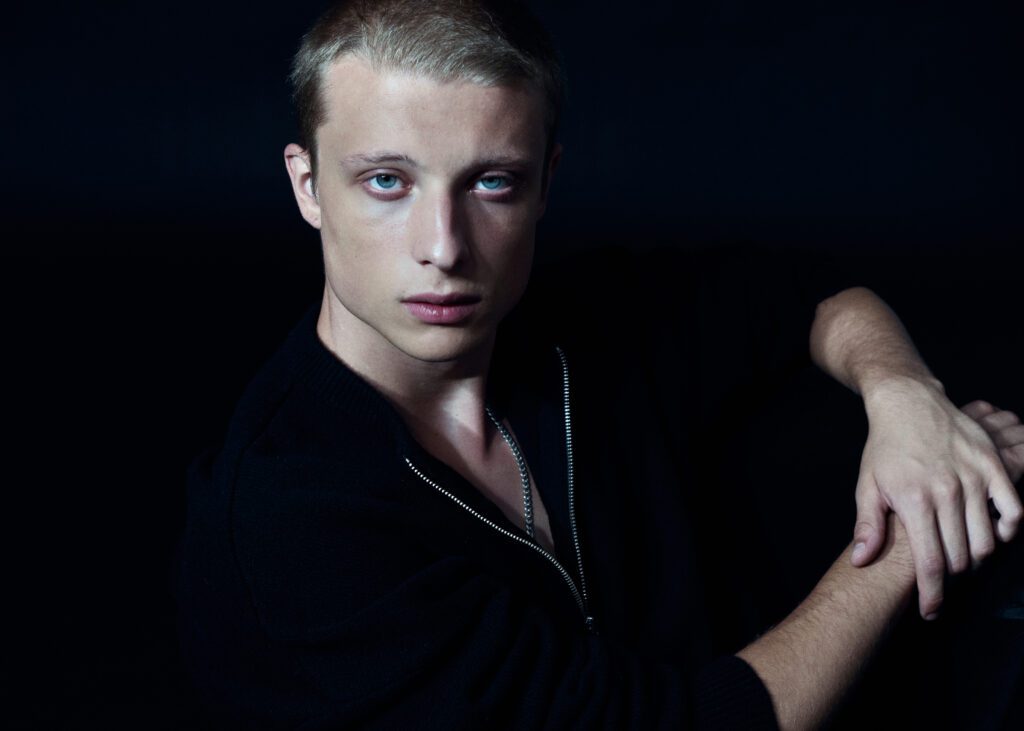
I would probably say sunglasses. Having light-colored eyes, I’m particularly sensitive to light, so they
are something I wear out of necessity, but also out of pleasure. I love exploring different shapes,
styles, and brands. Over time, they have become a defining accessory of my looks.
Looking at your upcoming projects, including Una piccola formalità, L’ombra, and your new Prime
Video series, has any character’s wardrobe inspired your own personal style?
In L’Ombra (Manetti Bros. — where I played Gammover), my character’s wardrobe was probably the
closest to my own: urban, streetwear-driven, and very much in line with my personal aesthetic. The
real opportunity to experiment with fashion, though, came with Magenta in Una piccola formalità:
an international rock star whose image was built around the energy and style of Damiano from
Måneskin. So who knows—maybe one day you’ll see me in long skirts, open-knit tops, and colorful
nail polish…
Finally, what style advice would you give to men who want to dress better while staying true to
themselves?
I would always suggest investing in garments made from quality materials, keeping in mind that
true quality is not necessarily defined by the price tag.